Can a vessel filter remove salt from borewell water?
TL;DR
RO reduces salt; sand filters catch dirt. A lab report and your water use help decide what goes before RO and whether to treat the kitchen or whole house.
No. An ordinary sand or multimedia vessel filter cannot remove dissolved salt from salty borewell water. It catches particles such as sand and silt. RO (reverse osmosis) pushes water through a membrane, a thin barrier that holds back much of the salt.
A vessel can still be useful before RO. At Future Water Systems, we use vessel filtration as pretreatment: water passes through it first, then through RO for salt removal. The two stages do different jobs. The right combination starts with your water report and how you plan to use the water.
What is inside the vessel filter matters
The blue or grey FRP vessels you see outside homes hold filter media, the material that treats the water. Sand catches dirt; carbon can reduce some odours; iron-removal media has a different job. Ask which media the quotation includes. An ordinary sand or carbon filter is not the salt-removal stage, whatever the vessel’s size.
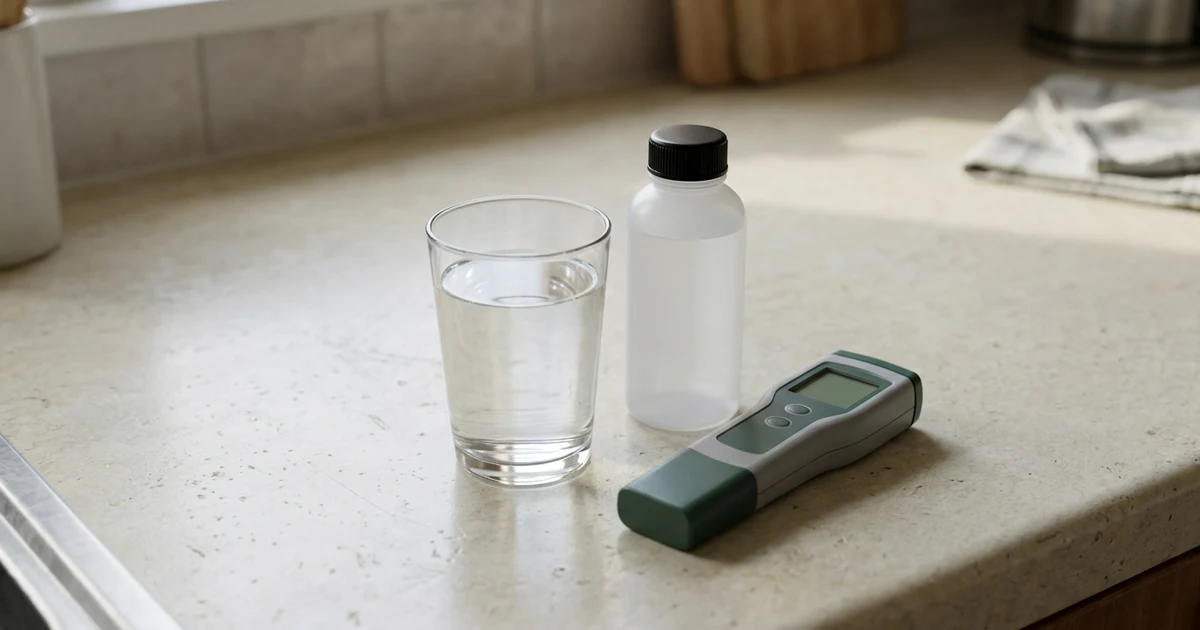
Clear water can still hold salt. It passes through an ordinary particle filter along with the water. RO works differently: pressure pushes water through a membrane that holds back much of the salt. The WHO treatment guide describes these different processes. A clear glass after filtration tells you little about salt removal.
| What you want to treat | What the treatment does |
|---|---|
| Sand and silt | A suitable particle filter traps suspended dirt; salt remains in the water. |
| Hardness | A water softener exchanges hardness minerals; it does not desalinate water. |
| Dissolved salts | RO separates water from dissolved salt; a separate reject-water stream carries more salt. |
| Bacteria | Disinfection is a separate need. A salt reading cannot show whether bacteria are present. |
A usual salt-based water softener exchanges calcium and magnesium, the minerals that cause hardness, for sodium. It can reduce scale, but adds sodium to the treated water. The WHO hardness document explains this exchange. Softer water and water with less salt are different results.
Vessel filtration prepares the water before the RO stage
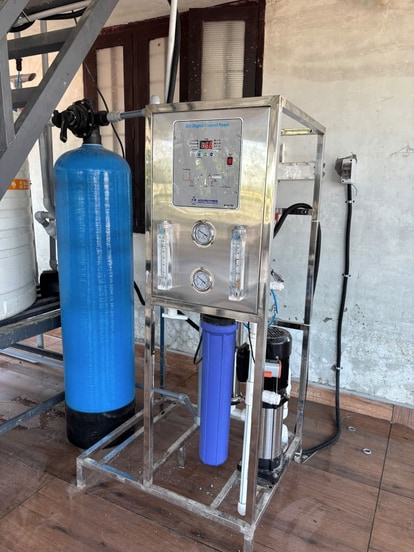
For a salt-removal setup, our treatment order is vessel filtration first, then RO. The filters prepare the feed water, the water entering the RO system. The membrane does the salt removal. Adding more sand-filter vessels does not turn that first stage into desalination.
The filters before RO must match the lab report. Dirt and scale can build up on RO membranes and stop them working well. The EPA’s treatment-technology overview explains why RO often needs pretreatment. Depending on the water, that may include particle filtration, iron removal or hardness control; it is not one fixed set of filters for every borewell.
A TDS reading starts the check; a lab report guides the design
TDS means total dissolved solids: dissolved salts and small amounts of other dissolved matter. A handheld meter gives a quick estimate. It cannot tell you how much of that reading is sodium, chloride or hardness, and it does not test for bacteria.
The WHO fact sheet on TDS does not set a health-based guideline for TDS as a whole. That does not make every TDS reading safe: individual substances and bacteria still need their own checks. Taste and a meter reading are clues, not a drinking-water safety report.
At Future Water Systems, the first whole-house site visit and consultation are free. We check TDS and pH, a measure of how acidic or alkaline the water is, and look at the site. A lab test is required before the final whole-house quote and system design. Kerala Water Authority’s quality-control service lists chemical and bacterial tests; ask which checks are available for your sample.
- Ask the lab about TDS, chloride and sodium when salt is the concern; confirm which tests it can provide.
- Check hardness and iron to choose the filters before RO. For drinking water, check bacteria and the other substances that may be present.
- Keep the report’s date and sample location: borewell outlet, storage tank or treated tap. These are different sampling points.
- Note whether the taste changes with the season or after a softener cycle. Compare source and treated water before assigning the cause.
For local background, our Thrissur, Guruvayoor and Kunnamkulam water-quality guide describes reported water quality across the district. A nearby borewell’s result cannot choose your system for you.
Choose kitchen treatment or whole-house treatment by use
If only drinking and cooking water need salt removal, a suitable kitchen RO purifier is the usual choice. It treats water at one outlet. The whole-house plant shown above is a different setup, for treatment across the property. You may not need that just because the kitchen water tastes salty; assess the rest of the supply for the way it will be used.
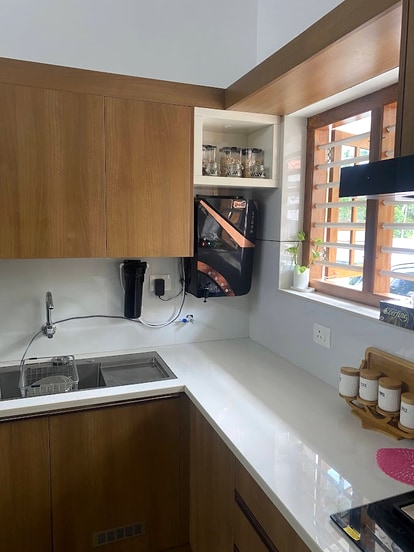
A kitchen purifier still has to suit the incoming water and your daily demand. Ask about the supported feed-water range, pretreatment and reject-water outlet. A small drinking-water system is not a way to supply every shower and washing machine. Our home kitchen systems page explains the available treatment types.
If treatment is needed across the property, the design has to account for pump flow, storage and how much treated water is needed at busy times. Start with the whole-house assessment. Businesses can use our commercial systems page to discuss their water use separately.
Ask where the reject water goes before choosing RO
RO produces treated water and a separate reject-water stream that carries more salt. The amount of reject water depends on the incoming water and system design. Ask for the expected treated-water output and reject-water flow based on your own lab report.
The design also needs a suitable place for that reject water to go, plus access for filter changes and membrane service. Its reuse depends on its quality and the intended use. Do not assume the saltier stream is suitable for the garden or for discharge anywhere on the property.
Keep the starting water report so treatment can be checked against it. If a system is sold for salt removal, ask how its treated water will be tested. Clear appearance alone cannot show that the salt content has fallen.
- An ordinary vessel filter catches dirt; RO is the stage that reduces salt.
- A water softener treats hardness and does not desalinate water.
- Choose treatment scope from the lab report and the intended water use.
Common questions about salty borewell water
Does a water softener remove salt from water?
No. A usual salt-based water softener exchanges calcium and magnesium, which cause hardness, for sodium. It can reduce scale, but adds sodium rather than removing salt.
Can a UV or UF purifier remove the salty taste?
UV uses ultraviolet light to treat microbes; UF, or ultrafiltration, filters particles through a membrane. Neither removes salt dissolved in the water. In a purifier that includes RO, the RO membrane does that job.
Does boiling remove salt from borewell water?
No. Boiling treats microbes, but it does not remove salt. As water evaporates, the salt stays in the pot. Heating your supply is not a way to desalinate it.
Is salty borewell water safe to drink?
Taste alone cannot answer that. A drinking-water check needs lab results for chemicals and bacteria. A low TDS reading also cannot prove drinking-water safety.
Can RO make salty borewell water suitable for drinking?
RO can reduce salts when the incoming water and design suit the system. Drinking-water suitability still depends on the other substances present, microbial control and checks of the treated water. Choose the system from the water report.
Have salty borewell water?
Tell us what the water is used for and share any lab report you already have. We can discuss the next check and the treatment your site may need.
Discuss your waterOn this page
- What is inside the vessel filter matters
- Vessel filtration prepares the water before the RO stage
- A TDS reading starts the check; a lab report guides the design
- Choose kitchen treatment or whole-house treatment by use
- Ask where the reject water goes before choosing RO
- Common questions about salty borewell water
- Does a water softener remove salt from water?
- Can a UV or UF purifier remove the salty taste?
- Does boiling remove salt from borewell water?
- Is salty borewell water safe to drink?
- Can RO make salty borewell water suitable for drinking?